Opens in a new tab
Search
Our CSR Commitments

Performance, Ethics and Sustainability

At Biowest, Corporate Social Responsibility (CSR) is an integral part of our identity and the way we operate.

Our commitment reflects an essential responsibility towards our customers, our employees and the environment.

Our approach is based on a simple principle: combining excellence in our practices with responsible management of our impact on the environment and society.

Double Materiality

Our Double Materiality Matrix

Our commitments are based on a double materiality assessment: our impacts on society and the environment, and the risks and opportunities that sustainability issues pose for our business. This dual perspective guides our priorities and actions.

How to Read Our Matrix

Impact materiality (vertical axis)
The significance of the impacts our activities have on society and the environment.
Financial materiality (horizontal axis)
The significance of sustainability-related risks and opportunities for our business.
The higher and further to the right an issue appears, the greater its significance across these two dimensions.

DOUBLE MATERIALITY

Our Double Materiality Matrix

    Click the preview to enlarge the matrix, then select a point to explore the corresponding issue.
    Our Commitments

    Our Pillars for a Sustainable Future

    EcoVadis Assessment

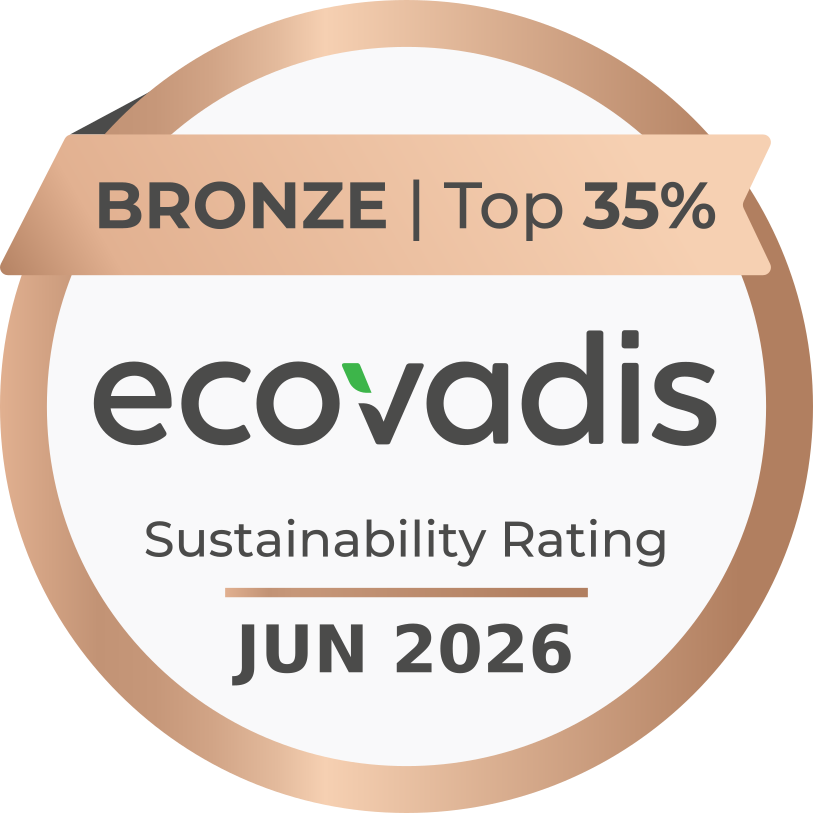
    Biowest retains the EcoVadis Bronze Medal in 2026
    Our teams’ efforts and the strength of our CSR approach have been recognised by EcoVadis.
    In 2026, Biowest was awarded the EcoVadis Bronze Medal, placing us among the top 35% of companies assessed by the platform.

    This medal recognises a structured approach covering the four areas evaluated by EcoVadis:
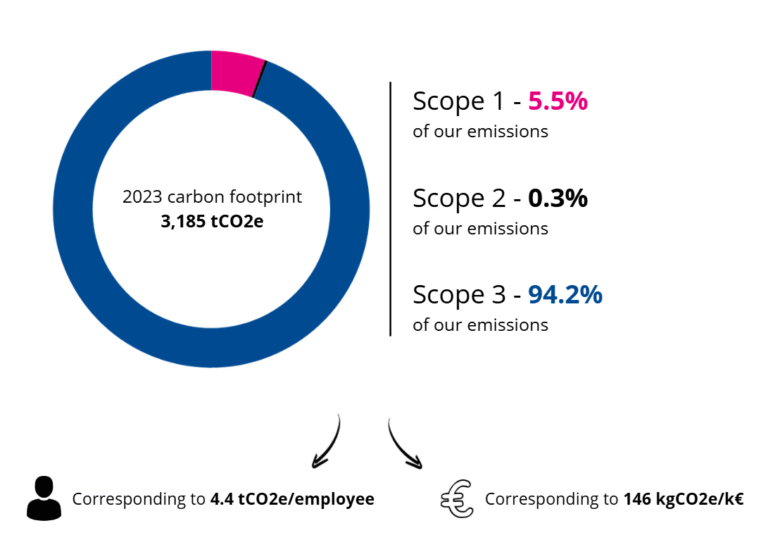
    As part of our CSR commitments, we carried out a carbon footprint assessment for 2023 using the Bilan Carbone® methodology, initiated by ADEME and supported by the Association for the Low Carbon Transition (ABC).

    This methodology enables us to measure the greenhouse gas (GHG) emissions generated by our activities, identify our main emission sources, understand their origins and implement concrete reduction measures.

    This work reflects our commitment to transparency and continuous improvement, bringing our teams together around a shared objective: reducing our environmental impact over the long term.
    What Do These Scopes Represent?
    Scope 1
    Direct emissions generated at our site, for example by equipment or our vehicle fleet.
    Scope 2
    Indirect emissions associated with energy generation, such as electricity or cooling.
    Scope 3
    Other indirect emissions, including those associated with upstream and downstream freight, employee commuting, purchases, digital activities and the end-of-life of our products.
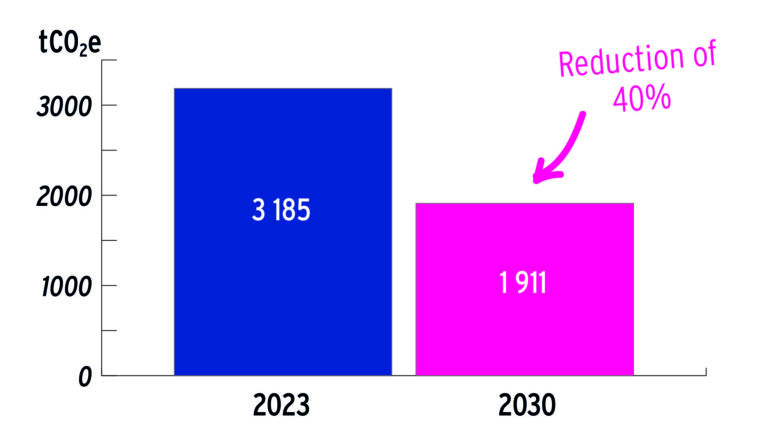
    2030 Target: Reduce Our CO₂ Emissions by 40%
    This action plan is designed to help us achieve our target of reducing GHG emissions by 40% by 2030, in line with France’s National Low-Carbon Strategy (SNBC).

    The SNBC forms part of the broader framework of the 2015 Paris Agreement.
    Our action plan focuses on five key areas:
    Our Fundamental Commitment to Animal Welfare
    At Biowest, ethical responsibility and animal welfare are central to our production practices.

    Our commitment is twofold: to ensure the quality and safety of our sera while maintaining the highest ethical standards throughout our supply chain.

    This approach is essential to our partners’ confidence and reflects our core values.
    Adherence to International Standards and Guidelines
    We ensure that the production of our animal sera complies with international animal health and welfare guidelines, including:

    The World Organisation for Animal Health (WOAH, formerly OIE): our production processes follow the animal welfare principles set out in the Terrestrial Animal Health Code.

    The Five Freedoms: we promote animal welfare throughout our supply chain by following the internationally recognised Five Freedoms, which address animals’ fundamental needs, including freedom from hunger and thirst, fear and distress, pain, injury and disease.
    Responsible Sourcing and the 3Rs Principle
    The 3Rs principle (Replacement, Reduction and Refinement) provides a framework for the use of animals in scientific research. It aims to limit animal use and improve animal welfare whenever such use is necessary.

    Our sourcing of fetal bovine serum is a separate practice: blood is collected as a by-product of animals slaughtered for commercial purposes, independently of serum collection.
    Reduction
    Minimise the number of animals used in scientific procedures.
    Refinement
    Adapt procedures to minimise pain, suffering and stress experienced by the animals involved.
    Replacement
    Wherever possible, favour methods that do not require the use of live animals.
    Transparency and Process Control
    To ensure the ethical production of Fetal Bovine Serum (FBS), we apply strict procedures during blood collection:

    Safety and Ethics
    Blood is collected from bovine fetuses only after death has been confirmed and the absence of vital signs rigorously verified. This procedure is designed to prevent any risk of pain perception by the fetus.
    European Traceability
    Our European-origin FBS is subject to strict European Union rules on animal handling. Ear tagging and identification records at the farm enable full traceability of the serum back to the individual animal.
    Our work is part of a continuous improvement process, supported by scientific research and the expertise of organisations such as the European Food Safety Authority (EFSA), as well as associations such as the Global Serum Alliance, whose objectives we share. Our commitment is your assurance.
    WordPress Cookie Plugin by Real Cookie Banner